Polar bears, or “sea bears,” are the world’s largest land predators. They stand as tall as 3m (10 ft.) and weigh up to 600 kg (1300 lb.)!
White Fur?
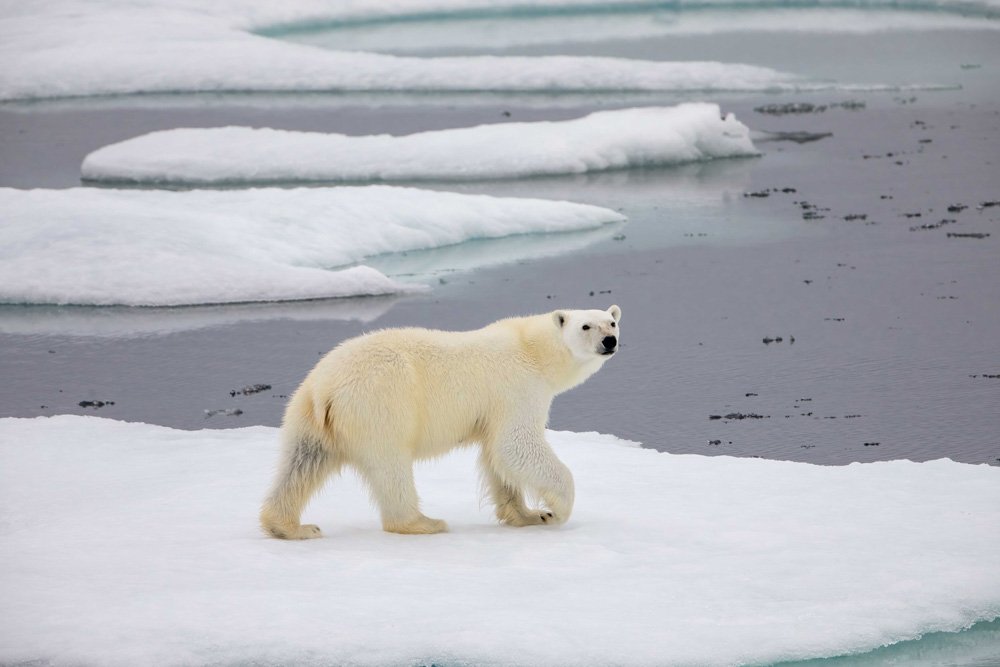
Did you know polar bear fur is not actually white? Although they appear white or yellow in color, polar bear fur is actually clear and hollow. Furthermore, polar bears’ skin is black.
So why do polar bears look white? The white coloring is caused by the reflection and scattering of light.

Equipped for the Ice and Sea
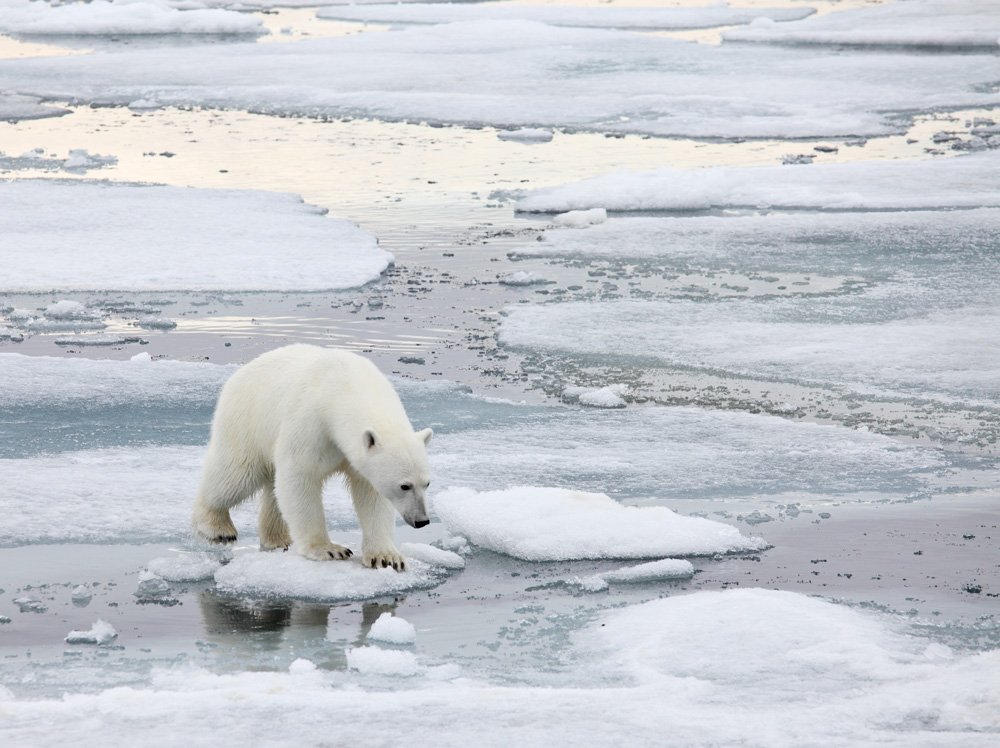
Inhabiting the ice and sea of the Arctic, polar bears are well-equipped for survival in a harsh environment.
Two coats of fur and a thick layer of blubber help insulate the polar bear’s body from the cold, keeping its temperature at an even 37° C (98.6° F).
In addition, polar bears’ paws are specially adapted for walking on the ice and swimming in the sea. Hairs and bumps on the soles of their feet provide traction, while webbing between their toes allows for effective swimming strokes.
What Polar Bears Eat
Polar bears mainly eat seals. In ideal hunting conditions, they will just eat the seal fat, leaving the carcass for other animals.
However, when food is scarce, polar bears will eat just about anything. Supplemental foods include walruses, short-legged reindeer, birds, bird eggs, kelp, and beached whales.
When in proximity to human settlements, they have even been known to eat garbage such as Styrofoam.
How Polar Bears Hunt
Polar bears have strong noses. They use their powerful sense of smell when hunting for seals, their main source of food. They can smell a seal’s breathing hole, or aglu, up to 1.6 km (1 mi.) away.
Once located, a polar bear will wait patiently by the hole and attack the seal’s head when it comes up for air.
Polar Bear Reproduction
After mating in the spring, a female polar bear spends the summer ingesting large amounts of food and building a maternity den in a snow drift to prepare for the arrival of her cubs.
Polar bears do not hibernate. However, when females are pregnant, they enter into a dormant state, where their heart rate, metabolism, and breathing rate slow down. She remains in this dormant state even as she gives birth.

The litter, usually two cubs, will spend two years with their mother learning essential hunting and survival skills.
On average polar bears live to be about 25 years old, reaching sexual maturity at around 4 years.
Conservation Status
Polar bears are currently listed as vulnerable by IUCN’s Red List. Global warming greatly impacts the fate of the polar bear.
A reduction of large masses of ice limits their access to seals. Rising temperatures also result in unstable maternity dens, as snowdrifts melt and collapse.

What You Can Do to Help
To help save the polar bear habitat, you can support the Climate Reality Project, which urges world leaders, companies, and communities to take action in curbing global warming.
Polar Bear Range

Polar bears inhabit the sea and ice masses of the Arctic circle.
More Polar Bear Resources
- Polar Bears International
- World Wildlife Fund Polar Bear Page
- Polar Bear Habitat Studies by USGS
- Polar Bear Article by Scott L. Schliebe, U.S. Fish and Wildlife Service
- US Fish and Wildlife Service’s Proposal for Polar Bear Conservation
Quick Fact Sheet
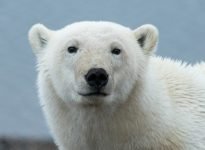
Common Name(s): Polar Bear
Scientific Name: Ursus maritimus
Animal Type: mammal
Size: Up to 3 m (10 ft.) tall
Weight: 600 kg (1300 lb.)
Lifespan: 25 years
Conservation Status: Vulnerable
About the Author

Abi Cushman is a contributing editor of Animal Fact Guide and My House Rabbit. When she's not writing about weird animal facts, Abi writes and illustrates funny books for kids. Her picture books, Soaked! and Animals Go Vroom!, are available now from Viking Children's Books.
To learn more and to download free activity sheets, visit www.abicushman.com. Follow her on Instagram at @Abi.Cushman.